
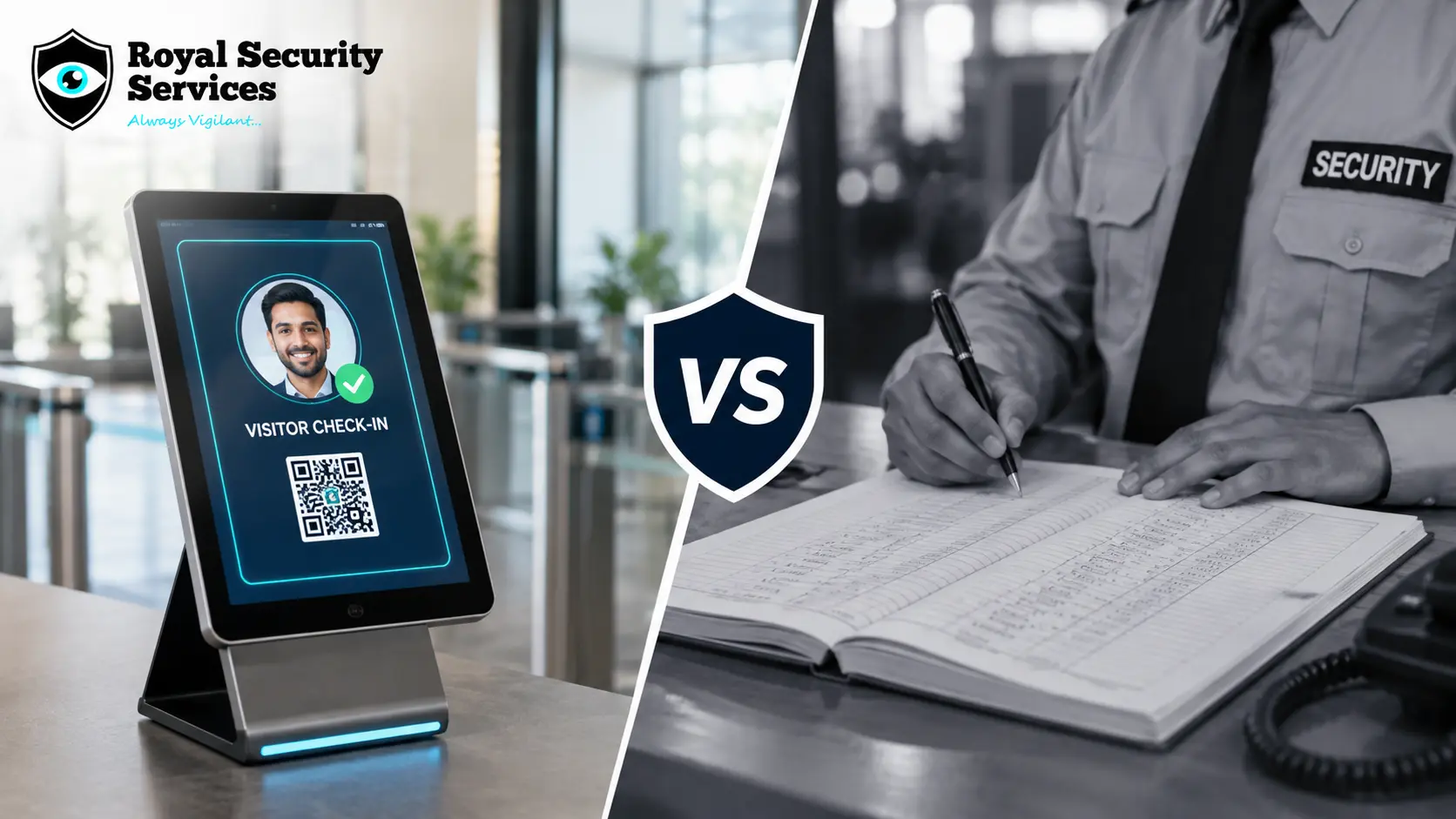
Walk into most corporate lobbies across India even today and a familiar object still sits on the reception desk: a spiral-bound register, half-filled with names, phone numbers, and signatures scrawled in a hurry. Familiar does not mean safe, and in 2026 that register has become a liability few organizations can afford to carry. Visitor management has moved from an administrative afterthought to a core security and compliance function, and the choice between a manual register and a digital system now carries real legal and operational weight.
What a Manual Register Actually Fails to Do
No Real Security Screening
A paper register records who claims to have entered, not who was actually screened. Anyone can write a false name, skip a column, or walk past reception during a busy hour without being logged at all. There is no photo capture, no ID verification, and no automatic check against a watchlist.
A Privacy Problem, Not Just an Inconvenience
Every open register sitting at reception exposes the name, phone number, and company of each previous visitor to whoever walks up next. Under India’s Digital Personal Data Protection Act, 2023, personal data collected without adequate safeguards creates a genuine compliance exposure. A logbook that any visitor can casually read qualifies as exactly that kind of unsecured data collection, and organizations relying on one are increasingly out of step with the law.
No Usable Record During an Emergency
In a fire, medical incident, or security lockdown, safety teams need an instant, accurate count of everyone on the premises. Handwritten logs are often incomplete, hard to read, and physically stuck at a reception desk that may not be accessible during an evacuation.
What a Visitor Management System Adds
Verified Identity, Not Self-Reported Entries
A digital VMS captures a photo, verifies ID where required, and can flag a visitor against a pre-set watchlist before they ever reach a sensitive floor. Corporate offices, IT parks, financial institutions, and manufacturing sites handling sensitive material rely on exactly this layer of verification to keep unauthorized individuals out.
Compliance Built Into the Workflow
Modern systems are designed around consent capture, encrypted storage, and audit trails that align with the DPDP Act’s requirements. Instead of leaving compliance to chance, the system logs who consented to data collection, when, and for what purpose, giving the organization a defensible record if it is ever questioned.
Real-Time Visibility for Security Teams
Host notifications, live occupancy counts, and exportable visitor lists give a facility’s security team the same real-time picture during a normal Tuesday afternoon that they need during an emergency evacuation. That visibility simply does not exist with a paper-based process.
Where Manual Registers Still Show Up
Smaller establishments, low-footfall sites, or facilities in the early stages of formalising their security setup sometimes continue with paper logs purely due to cost or habit. A gated residential society with a handful of daily visitors carries a very different risk profile than a corporate campus with hundreds of guests, vendors, and contractors moving through each day. Scale and sensitivity of the site should guide the decision, not simply what has always been done.
Making the Right Call for a Corporate Site
Assess Visitor Volume and Sensitivity
Sites handling confidential data, high-value assets, or restricted zones should treat a digital VMS as close to mandatory. Lower-footfall sites can weigh cost against the residual risk of manual entry.
Check Integration With Existing Security Layers
A visitor system works best when paired with trained guards at the point of entry, since technology verifies identity while a human presence manages judgment calls, de-escalation, and physical response.
Confirm Data Handling Practices
Before adopting any platform, organizations should confirm how visitor data is stored, who can access it, and how long it is retained, keeping the setup aligned with DPDP Act obligations rather than assuming the vendor has already handled it.
Final Word
A manual register might still work for a handful of low-risk sites, but for most corporate environments in 2026, it represents an outdated approach carrying real legal and security gaps. A properly implemented visitor management system, backed by trained security personnel at the point of entry, gives organizations both the verification and the compliance posture that paper simply cannot match.
Royal Security Services helps corporate clients across Bangalore assess their entry-point security and recommend the right mix of trained guards and visitor management technology. Visit royalsecurity365.in to schedule a site assessment.